
Blog  Vocaki
Spaced Repetition: How to Remember English Words for Good
On this page
You learn ten new English words on Monday. By Friday you remember three. This is normal, and it is not because you are bad at languages. It is how memory works. The good news is that the same science that explains forgetting also shows the fix: spaced repetition.
The forgetting curve
In the 1880s the German psychologist Hermann Ebbinghaus memorised lists of nonsense syllables and tested himself at different intervals. He found that memory drops fast at first and then levels off. Most of what you forget, you forget in the first day or two.
The important part came next: every time he reviewed a list, the curve became flatter. The memory lasted longer before it faded again. Many studies since then have confirmed this spacing effect: reviews spread out over time beat the same amount of study crammed into one session.
Two ideas that make words stick
1. Space your reviews
Review a word just before you would forget it. If you review too early, you waste time on something you still know. If you review too late, you are learning it from scratch. Each successful review pushes the next one further away.
2. Test yourself, do not just re-read
Looking at a word and its meaning feels productive, but it is passive. Trying to recall the meaning before you see it, even when you get it wrong, strengthens the memory much more. Psychologists call this retrieval practice or active recall. Flashcards work because they force you to answer first.
A simple schedule you can use today
If you study without an app, a fixed schedule is a good start. After you learn a new word, review it:
- The next day
- Three days later
- One week later
- Two weeks later
- One month later
If you forget a word at any step, start it again from step 1. Words you always remember quickly drop out of your daily load, and your time goes to the hard ones.
Paper flashcards in a few boxes (the Leitner system) work exactly like this: a card moves to the next box each time you get it right and back to the first box when you miss it.
Why apps do it better
A fixed schedule treats every word the same, but some words are easy for you and some are not. Modern schedulers adapt to each word and to you. FSRS (Free Spaced Repetition Scheduler) is an open-source algorithm that estimates how likely you are to remember each word on each day, and schedules the review for when that chance drops to a target, for example 90%. It is now used by popular flashcard tools because it gets the same results with fewer reviews.
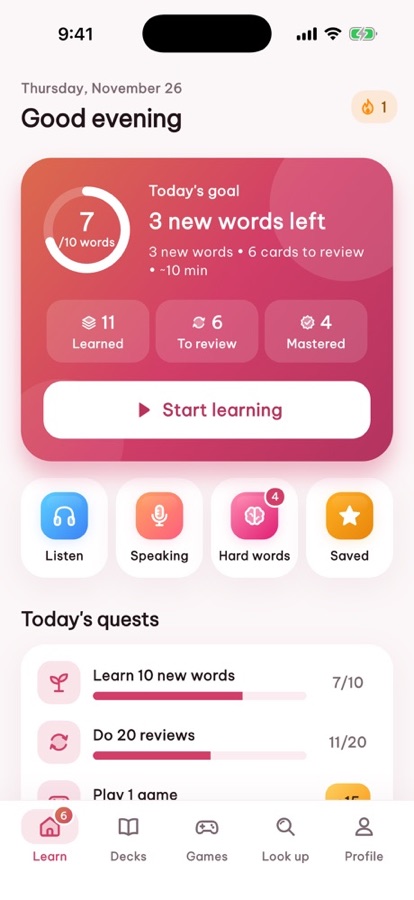
Vocaki uses FSRS for every word you learn. You do not need to track anything: the app shows what is due today, and the home screen widgets pick from the same list, so a quick glance at your phone is also a well-timed review.
Tips for better reviews
- Keep sessions short and daily. Ten minutes every day beats an hour on Sunday.
- Do your reviews before new words. New words are only useful if the old ones stay.
- Say the word out loud. Hearing and saying it gives your memory one more hook.
- Learn words in a sentence. "Make a decision" is easier to remember and use than "decision" alone.
- Be honest when you grade yourself. If you hesitated, mark it as hard. The schedule only works with honest answers.
Start small
You do not need to learn 50 words a day. Five to ten new words a day, reviewed on a good schedule, adds up to well over a thousand words a year that you actually remember. For a simple daily plan, read how to build your English vocabulary in 10 minutes a day.
More articles
 Vocaki
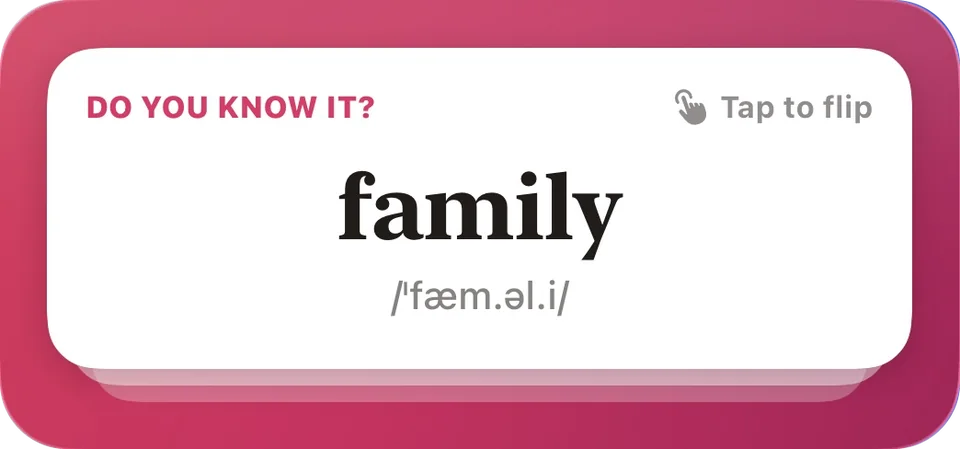
How to Add a Vocabulary Widget to Your Home Screen and Lock Screen
Step-by-step: add a vocabulary widget on iPhone and Android, pick the right style, and place it where you will actually see new English words every day.
 Vocaki
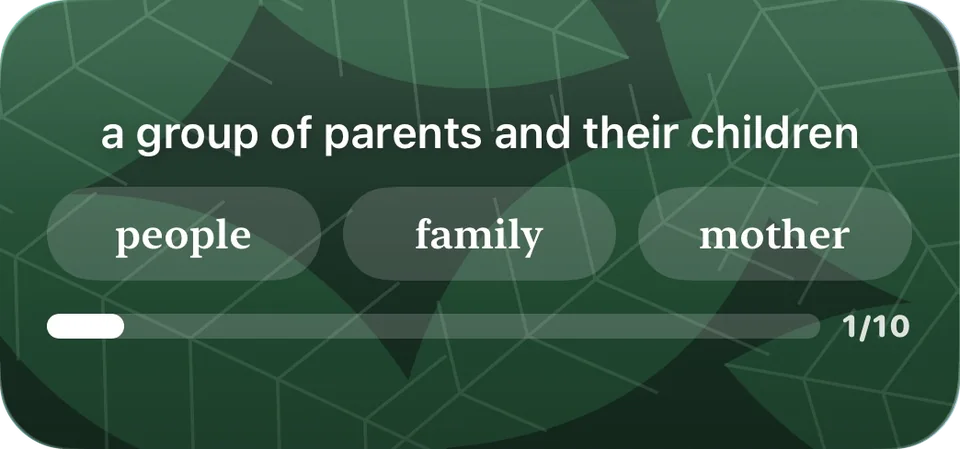
How to Build Your English Vocabulary in 10 Minutes a Day
A practical vocabulary builder routine. Which English words to learn first, how many per day, and a 10-minute plan that keeps them in your memory.